A personal breakdown of everything I need to know to build industrial finishing systems
People sometimes ask me what I do for a living. I never really know how to answer. “Engineering,” I say. Or “Automation.” Or sometimes just “I build stuff.”
But none of those really explain it. Because the truth is, I design and deliver fully automated finishing systems—and to do that, I need to understand a ridiculous range of disciplines. Mechanical, electrical, fluid, thermal, chemical, pneumatic, and human.
One day I’m calculating torque on a servo motor. The next, I’m debugging a PLC, reviewing ductwork, or trying to explain to a contractor why you can’t just run regular wire in a Class I Div 1 booth. Some days I’m running quotes and business meetings. Other days I’m teaching a shop employee how to properly install a spindle bearing—or doing it myself.
So instead of trying to explain it at a cookout, here’s everything I personally need to know to make one of these systems work.
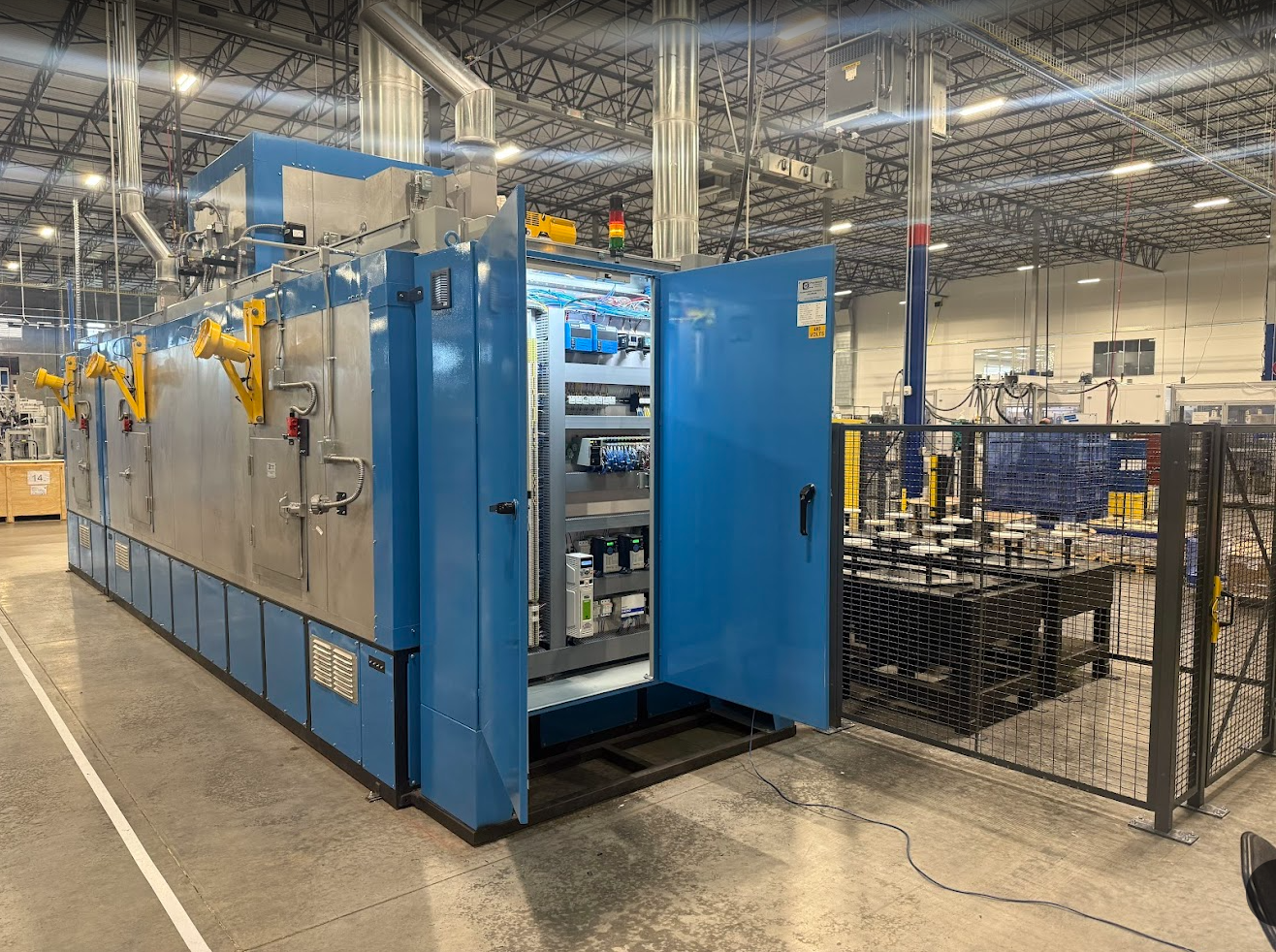
Precision Conveyor automated system with integrated controls—engineered for high-performance finishing applications.
1. Managing People: Employees, Contractors, and Controlled Chaos
Before anything gets designed or built, I’m managing the humans who make it happen. The quality of the system starts with the people touching the steel, wiring the panels, and programming the logic.
Inside the Shop:
Teaching employees to read drawings and follow a process
Reviewing BOMs, cut sheets, and fixture setups
Creating structure, checklists, and accountability systems
Handling gaps in training, phone distractions, and no-shows
Keeping the good ones engaged—and moving the wrong ones out
Contractors & Site Work:
Coordinating electrical and mechanical subs across state lines
Managing install timelines, safety requirements, and site readiness
Aligning vendors for robots, fluid systems, and ovens
Reviewing scope creep and catching what everyone else forgot
No system builds itself. People do. And I have to lead every step of it.
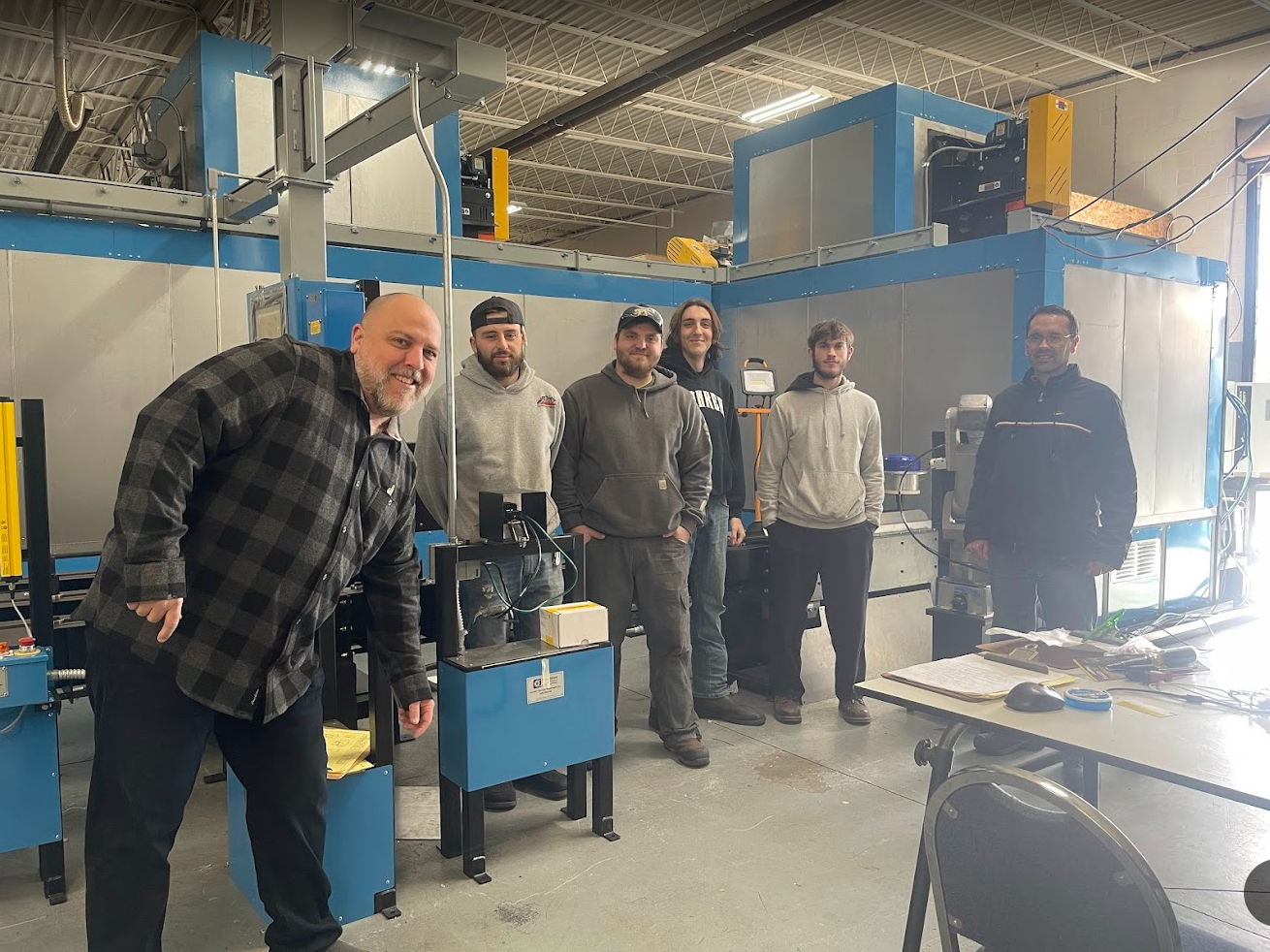
The team behind the build—shop crew and engineering during final assembly of a custom finishing system.
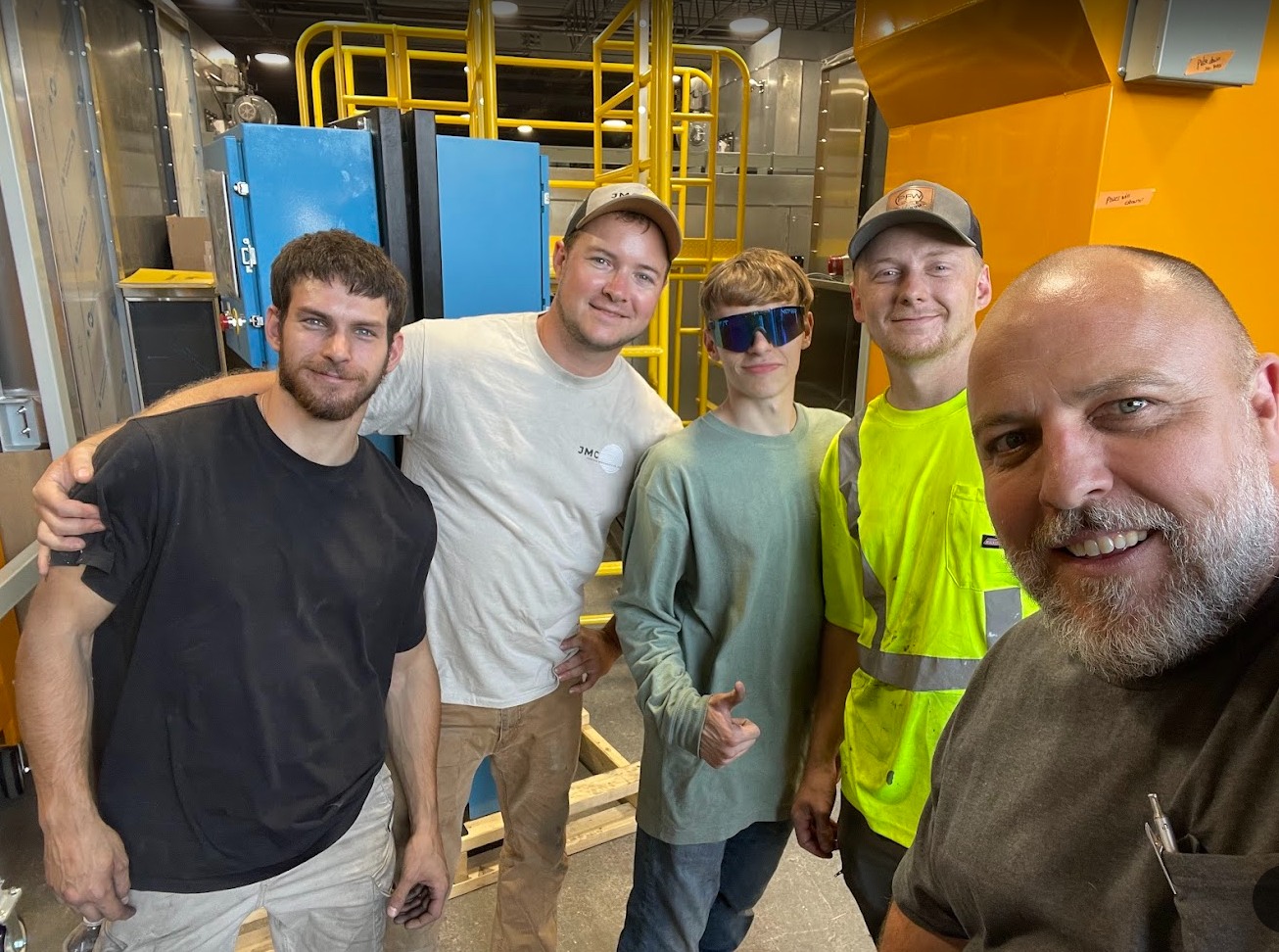
Wrapping up a successful finishing system install in New York with part of the field crew.
2. The Conveyor: The Backbone
Chain-on-edge. Indexing. Spinning. Sometimes all three.
Motor sizing, gear ratios, torque calculations
Chain, sprocket, and spindle layout for rotation or part spacing
Welding and machining for alignment over 100+ feet
Materials that survive overspray, heat, and washing
Engineering a system that runs 24/7 without failing
If the conveyor doesn’t work, nothing else does.
3. Fixturing & Part Handling: Hold It Right or Spray It Twice
If the part isn’t held correctly, everything downstream suffers—coating quality, transfer efficiency, even grounding.
Designing fixtures for consistent orientation and robotic compatibility
Accommodating electrostatic grounding and spin requirements
Choosing materials that survive heat, solvents, and mechanical abuse
Making them robust, cleanable, and swappable
Building them in-house or working with shops to get it right
Sometimes it’s a simple pin. Sometimes it’s a $5,000 clamping nightmare. Either way, I own the result.
4. Automation & Material Handling: Making It Move Without Touching It
Robotics and motion systems are only as smart as the logic and layout behind them.
Spray robots (like Fanuc PaintMate)
Pick-and-place systems, end-of-arm tooling
Servo-driven spray gun positioners
Bowl and vibratory feeders for small parts
Vision systems for orientation, presence, and masking
Coordinated motion, light curtains, fault zones
Automation isn’t just efficiency—it’s repeatability. And when it breaks, it’s mine to fix.
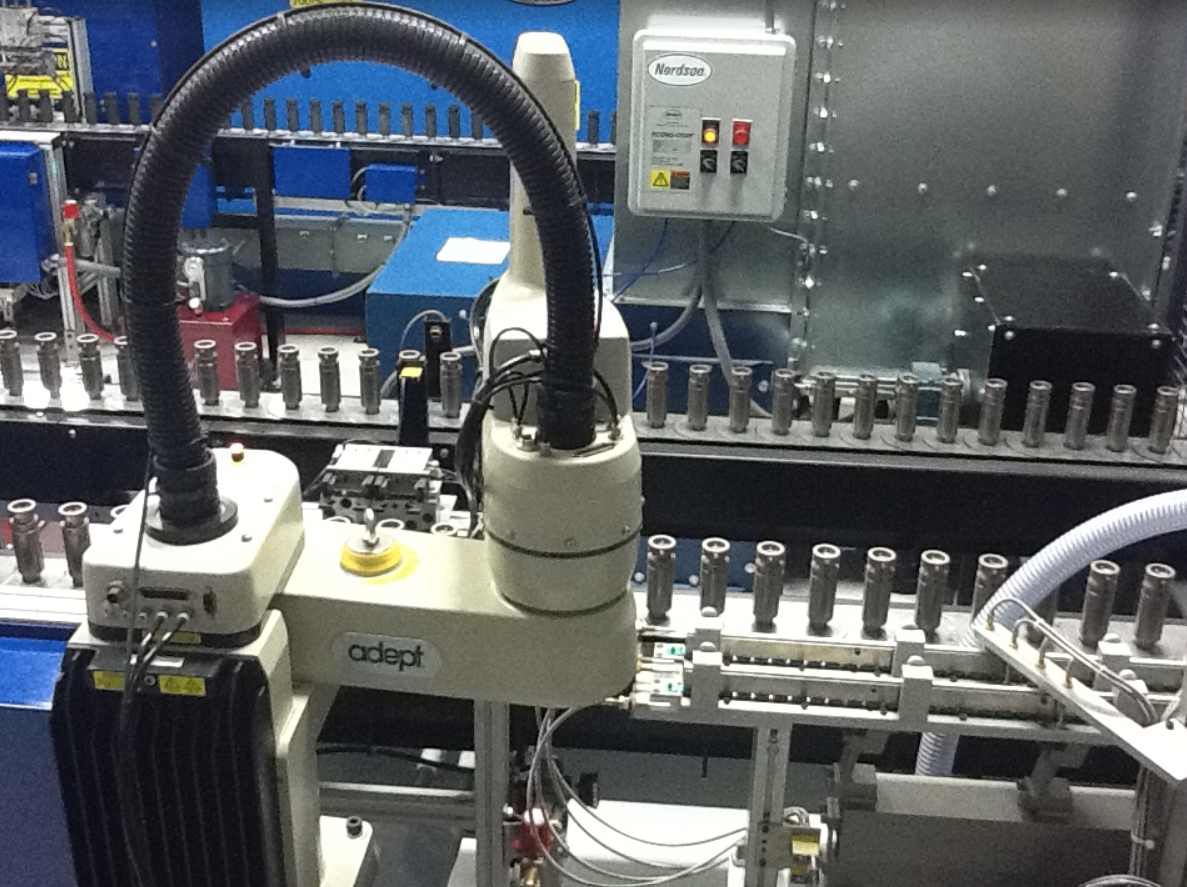
Automated masking station using a pick-and-place robot—part of a high-throughput finishing system.
5. Spray Booths: Where Airflow and Explosions Don’t Mix
Designing spray environments isn’t just about airflow—it’s about not getting shut down by fire marshals.
Airflow calculations, capture velocity, and balance
Class I, Div 1 or 2 component selection
Layout for robot reach, operator access, and lighting
Exhaust, makeup air, filter loading, and booth cleaning
Safety interlocks, alarm zones, and shutdown logic
Every detail has to meet code—and still be serviceable by a guy with a wrench.
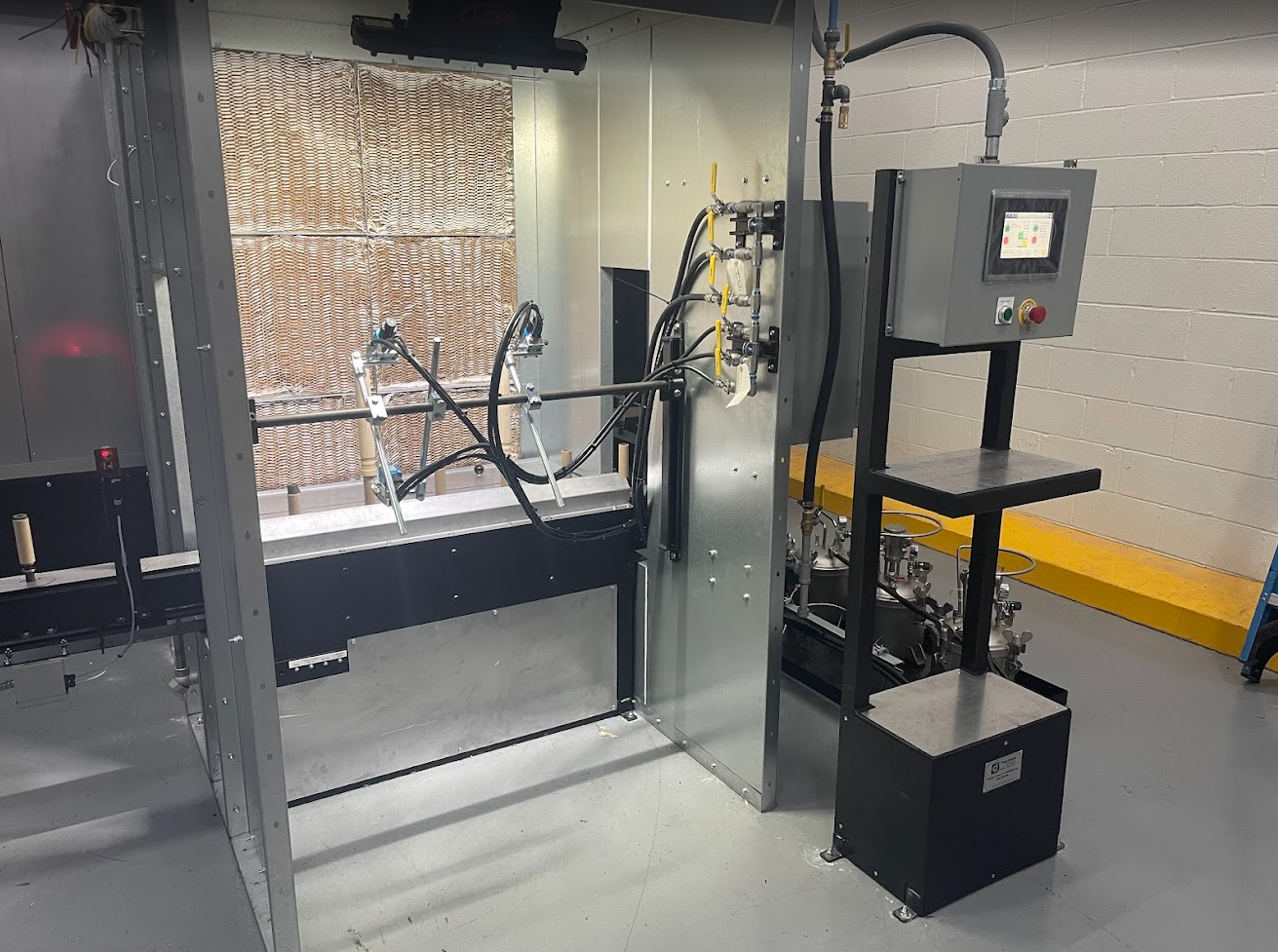
Automated spray booth designed for consistent airflow, operator safety, and precise liquid coating control.
6. Fluid Handling & Liquid Coating: Where the Paint Meets the Part
From drum to gun, the paint delivery system has to work flawlessly—or the finish falls apart.
You only find out what’s wrong when the part comes out looking like garbage. So I have to make sure it doesn’t.
7. Powder Coating: Air, Voltage, and a Lot of Cleanup
Different process, different set of headaches.
Powder delivery systems: hoppers, pumps, and charge modules
Grounding strategy for part and fixture
Reclaim systems and filter maintenance
Overspray control and booth cleaning
Bake profile tuning and oven timing
Humidity control and conductivity planning
Powder coating looks simple until you’re stuck doing a 3-hour color change.
8. Pneumatics & Instrumentation: The Invisible Muscle
Compressed air doesn’t get much credit—until something won’t fire, vent, or reset.
Solenoids, regulators, flow controls, exhausts
Valve manifolds and pilot logic
Air prep and pressure monitoring
Tubing layout, push-to-connect vs. threaded fittings
Sensors for flow, vacuum, temperature, and pressure
Integration into PLCs and safety circuits
It’s cheap to install—and expensive when it fails.
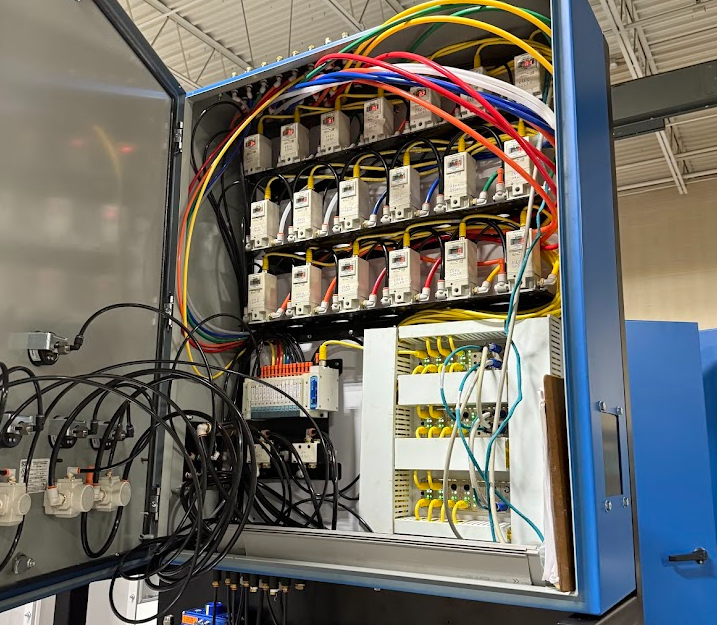
Pneumatic control panel loaded with solenoid banks and valve manifolds—because nothing moves without air.
9. The Oven: Built to Bake, Not Burn
This is where coatings cure—or where bad airflow ruins a perfect paint job.
Burner selection, duct layout, and fan CFM
Mineral wool insulation, foil-faced panels, and steel framing
Time-at-temp calculations for part mass
Electric vs. gas vs. infrared heating
Modular bolt-up design for shipping and install
Expansion joints, removable panels, and service access
Every degree matters. And the oven has to work on Day 1—not after a field rebuild.
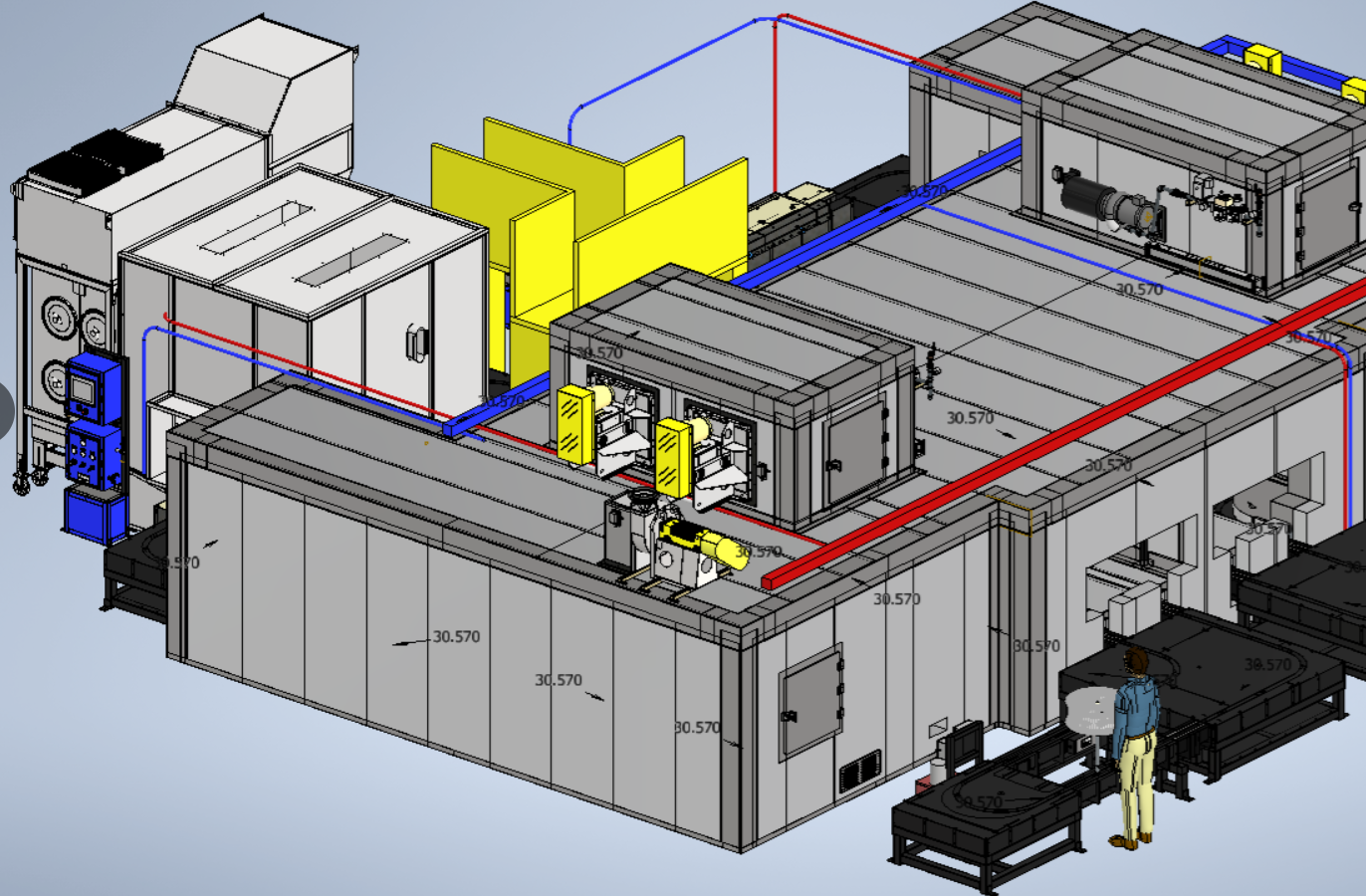
Conveyorized curing oven system designed by Precision Conveyor, with modular oven chambers, burner boxes, and part transfer stations.
10. Electrical Controls: The Brain Behind the Build
The control panel is the heart of the system—and I’m the one wiring the logic.
PLC and HMI integration
Servo drives, motor starters, VFDs
Branch circuit protection, overloads, and interlocks
NEC compliance, NFPA 70, UL design when required
Class I, Div 1 wiring and labeling
Grounding, shielding, and termination
A system can be built beautifully—and be totally useless if the controls aren’t right.
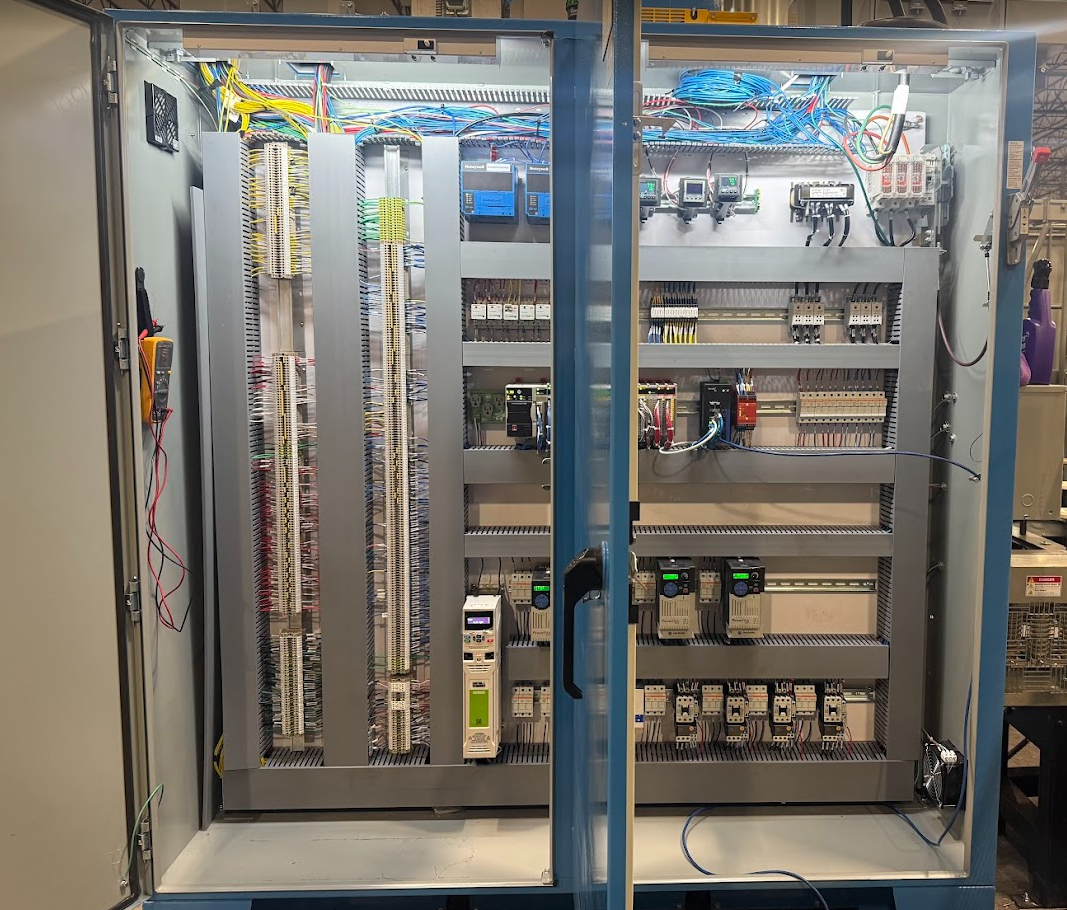
Inside a completed electrical panel—this is the brain of the entire finishing system, coordinating everything from motor control to safety logic.
11. Programming & Integration: Making the System Think
I don’t just wire it—I write the logic that makes it work.
PLC code for motion, alarms, recipes, safety
HMI design for real-world operators
Fault handling and recovery logic
Robot communication and cycle timing
Remote access for support and diagnostics
Live tuning during production runs
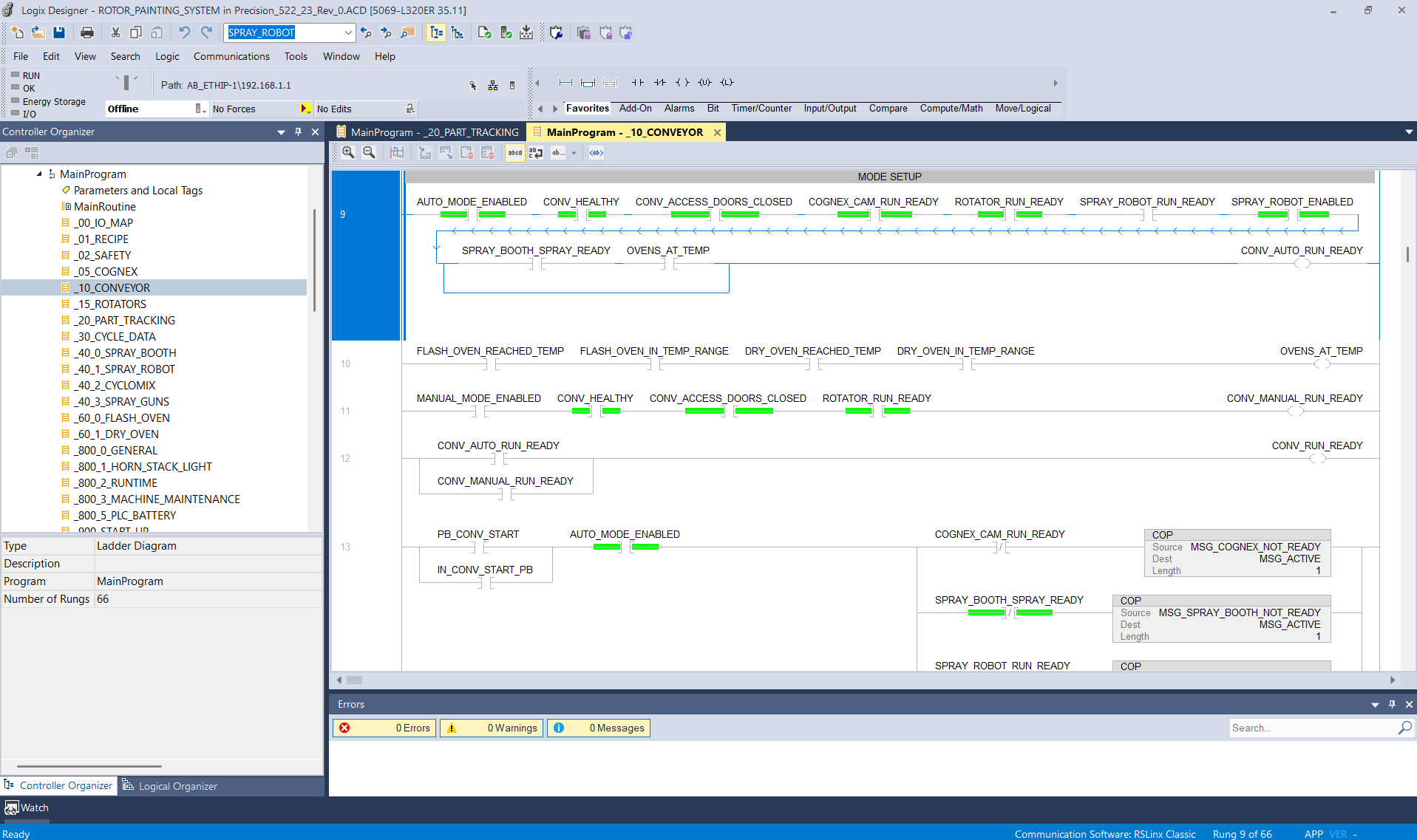
If a sensor fails, the system needs to respond. If a gun jams, the robot needs to stop. And if the wrong recipe is loaded, someone’s getting a call. My code prevents all of that.
PLC ladder logic from a Rockwell Logix Designer project, coordinating conveyor movement with oven, spray booth, and safety interlocks
12. Documentation: So People Know How (and What) Not to Screw Up
If I don’t write it down, I’ll be the one answering the call six months later.
GA drawings, wiring diagrams, pneumatic schematics
Fluid schematics, PLC I/O lists, logic overviews
Alarm guides and maintenance checklists
HMI documentation and parts replacement instructions
Digital and printed manuals, organized and searchable
Nobody reads it—until something breaks.
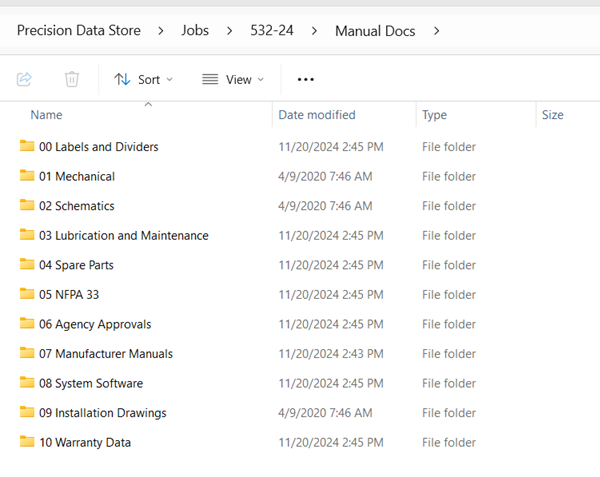
Structured documentation folders used at Precision Conveyor to organize schematics, manuals, system software, and compliance information for each project.
13. Shipping, Installation & Training: Making It Real
The build’s done. Now I have to get it to the customer and make sure it works in their world—not mine.
Crating, freight, blocking, and rigging coordination
Field assembly of ovens, ductwork, conveyors, and panels
Power-up, loop checks, system dry runs
Operator and maintenance training
Final commissioning, startup tuning, and support follow-up
It doesn’t matter how good it looks on a drawing. If it doesn’t run at the customer site, it’s not done.
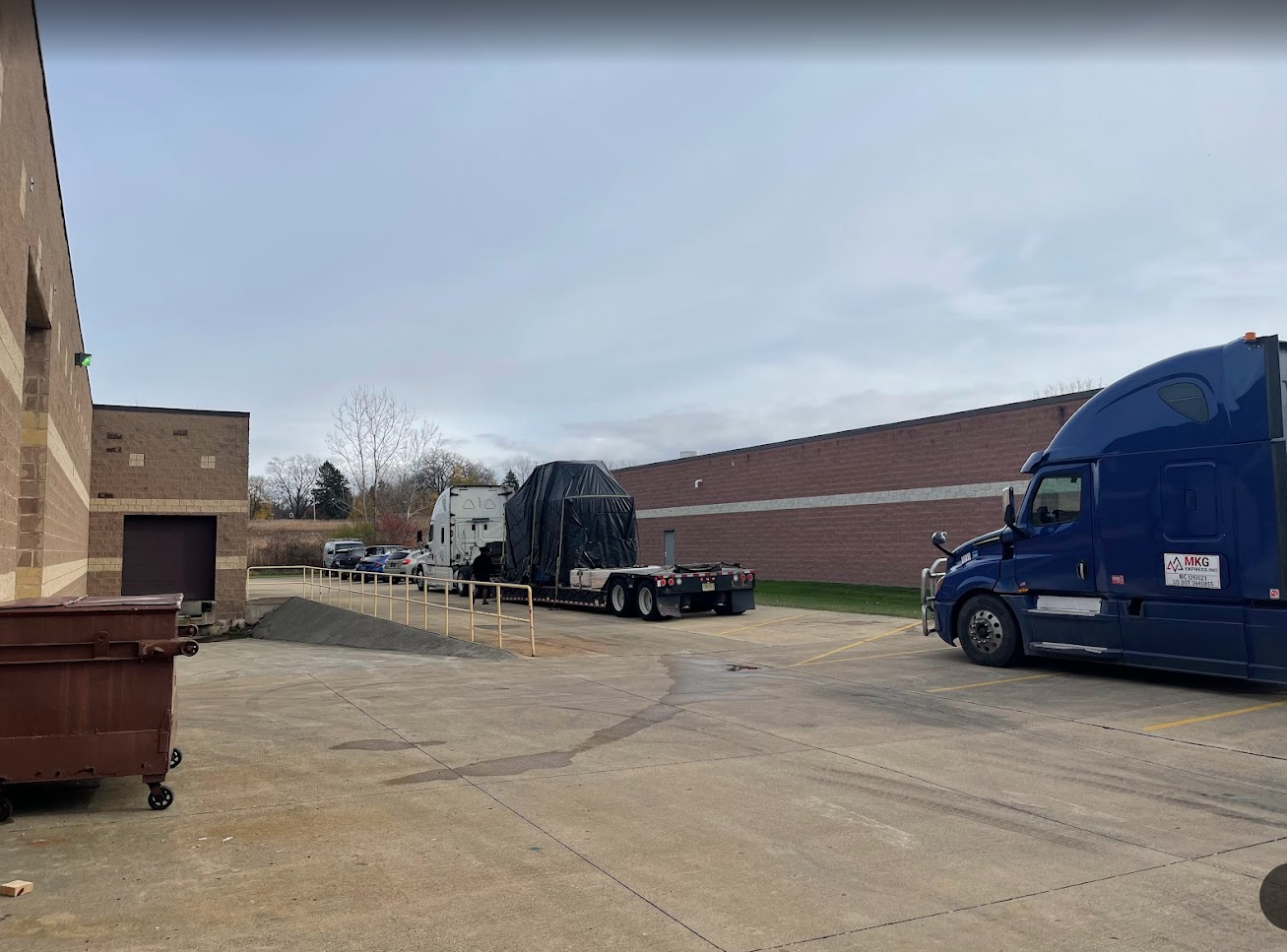
A completed finishing system being prepped for shipment outside Precision Conveyor’s facility—because it’s not done until it’s on a truck.
So... What’s the Job Title for All That?
There isn’t one.
These days, I outsource more of the hands-on work. I’ve got people wiring panels, programming PLCs, assembling systems—but the only reason that works is because I still know how it all fits together.
If something goes wrong—or if something’s missing—I have to catch it. If someone’s new—or overconfident—I have to guide it. And if a system shows up on site and doesn’t run, I own the outcome.
That’s the job. Not just building systems, but knowing enough to make sure they get built right.